AI & Machine Learning
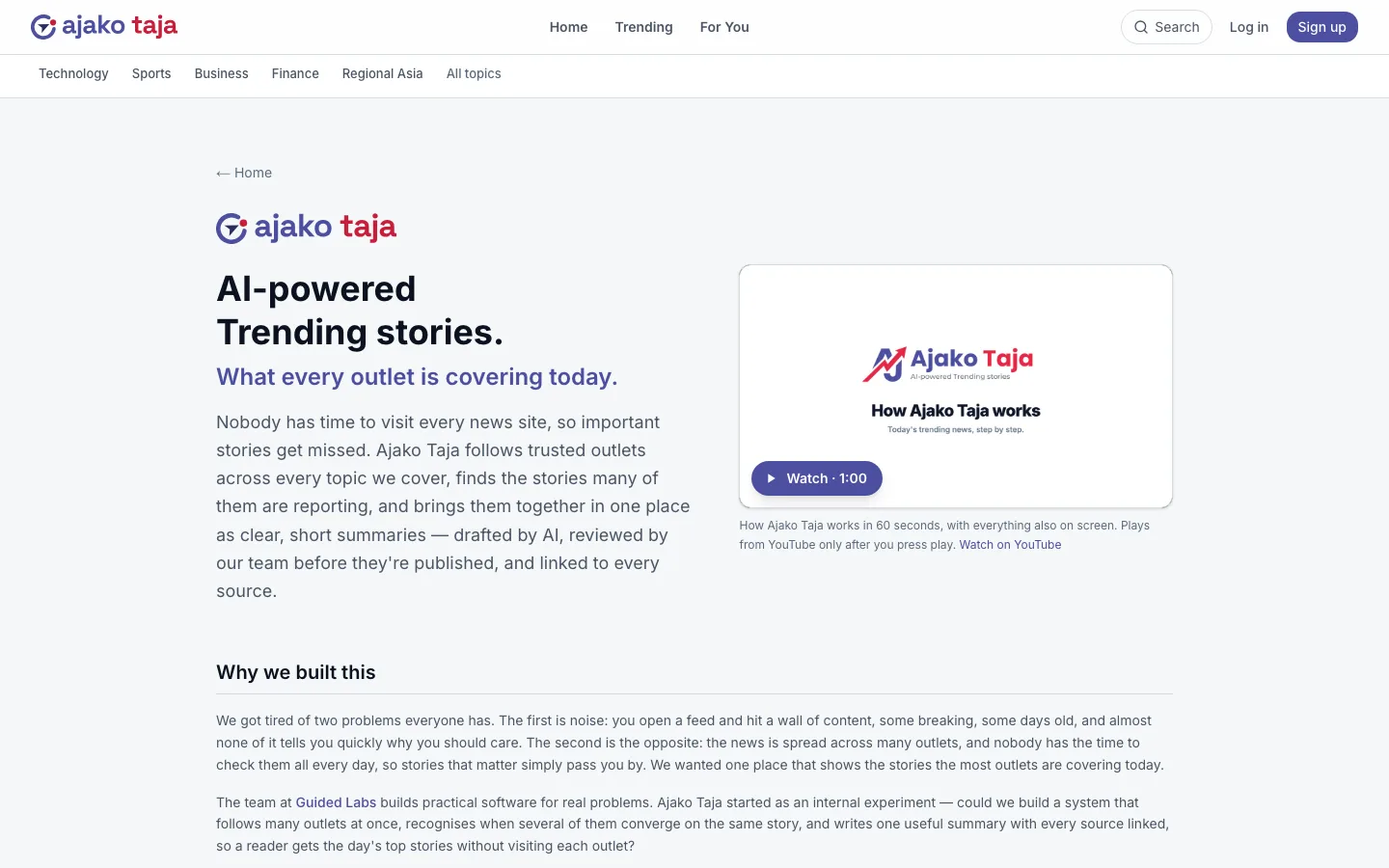
What every outlet is covering today
Why we built AjaKoTaja, a news site that gathers the stories many outlets are reporting, writes one clear summary with every source linked, and never publishes without an editor.
Guided Labs Team
· 3 min read
Most mornings start the same way. You open one news site, then another, then a third, because none of them has the whole picture. Somewhere in the second or third tab you notice that half of what you're reading is the same story told with different headlines. The other half is old.
We built AjaKoTaja to fix that one small, daily annoyance. Its job is simple to describe: show you what every outlet is covering today, in one place, without making you read the same thing five times.
One story, many outlets
Every hour, AjaKoTaja collects stories from a hand-picked list of news feeds. The interesting part is what happens next. Two outlets almost never use the same headline for the same event. Sometimes they don't even use the same language: one report arrives in English and another in Nepali.
So before anything is written, AjaKoTaja asks a plain question about each new report: have we seen this event already? It checks against everything covered in the last 48 hours, starting with quick, cheap comparisons and only bringing in an AI comparison for the close calls. If it's the same event, the new outlet joins the existing story. If it's genuinely new, it becomes a new topic. If the system isn't sure, a person decides.
A draft, not a decision
Once a topic is approved, an AI model drafts a short article from what the outlets actually reported: a lead, the key details and, where the reports support it, some background. It reads an outlet's page only if that site allows it, it never gets around a paywall, and it never stores or republishes anyone's article.
Then the draft gets checked, more than once:
- A second AI pass compares every claim with the sources. Anything it can't support is removed, and if something still can't be backed up, the article stays a draft.
- A copy check makes sure we're not borrowing an outlet's wording. Long runs of identical words trigger a rewrite, and direct quotes are kept short and few.
- Stories that only one outlet has reported are flagged for the reviewer.
And finally a person reads it. An editor checks the headline, names, numbers, dates and attribution against the sources. Only a person can publish. That's the rule we started with, and it hasn't changed.
Showing our work
Every article lists the outlets it draws on under "How outlets covered it", so you can go straight to the original reporting. The byline says plainly that the article was drafted by AI and fact-checked by our team. You can see when it was published and when it was last updated, and corrections follow a published policy.
Even the pictures follow a rule. We don't use news outlets' photos and we don't generate fake ones. Each story gets a credited, free-licence photo or a simple graphic made from the story's own details.
More than headlines
AjaKoTaja also publishes data reports: football results and fixtures, and end-of-day prices from the Nepal Stock Exchange. These are written only from the provider's figures, and every number is checked against the data before an editor sees the draft.
What it isn't
AjaKoTaja isn't trying to replace the outlets it reads. It depends on them. It's a way to see, at a glance, what they're all talking about, and then go and read the reporting that interests you. You choose the topics you follow, and it gets out of the way.
You can try it at ajakotaja.com. If something looks wrong, tell us. That's exactly what the corrections policy is for.